How to Build Financial Stability as an Independent Musician
Why Music Income Is Inherently Unpredictable
A music career is a wildly unpredictable thing financially — even when you’re “successful” and technically full-time.
The inconsistency never really goes away.
You can land a big salary gig and still be let go overnight.
You can have your best touring year ever, only to watch the calendar go quiet in the New Year.
Even when you’re working, there are gaps in the touring schedule, cancellations, and the seasonal cycle of busy summers and quiet winters.
That volatility isn’t a sign you’re failing.
It’s built into the industry.
And yet — it’s still completely possible to thrive financially as a musician.

The Lever System: How to Build Flexible Income Streams
The best way I’ve found to ride the rollercoaster is to build multiple income sources you can turn on and off like levers, depending on how your music income is flowing.
For me, that looks like:
Touring
Session work
Graphic design
Teaching music
Merchandising
Two seasonal businesses I run with my partner
In the winter, touring pretty much stops.
If my savings are running low, I shift gears. I work on merchandising for our businesses. I take on more design work. I pick up extra teaching.
Because all of my work is freelance, I can start and stop as needed. That flexibility is key.
The goal isn’t to abandon music.
It’s to protect it.
When your financial survival doesn’t hinge on one income stream, you make better creative decisions.
You say no more confidently.
You write from a steadier place.
You choose gigs because they fit — not because you’re panicking.
Income Ideas Musicians Can Turn On and Off
If you’re not sure what you could do outside of your main music income, don’t immediately jump to something random.
Start by looking at what you already do.
Independent musicians learn a ridiculous number of peripherally related skills out of necessity.
You might already be:
Writing clean, readable charts
Editing video for socials
Designing simple merch
Booking tours
Managing mailing lists
Building simple websites
Running sessions efficiently
Those are marketable skills.
You might be surprised at what you already know how to do well enough to charge for. The first step is simply noticing.
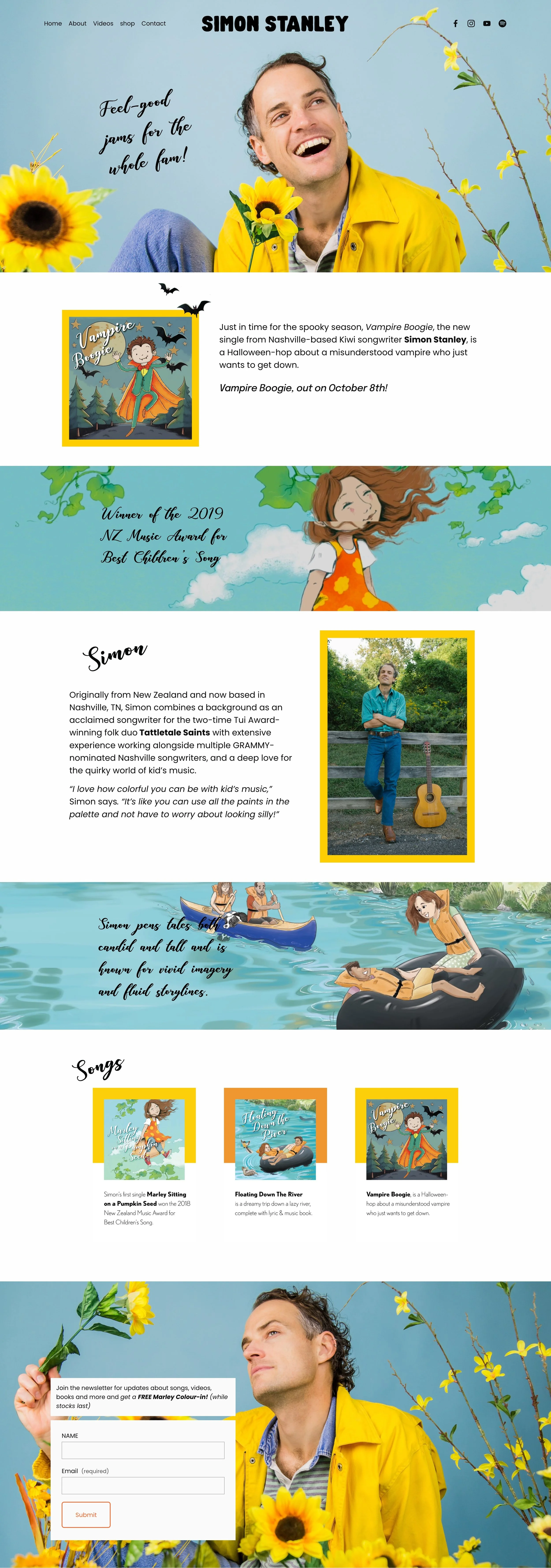
Website by moi.
Pro Tip: Choose Skills That Support Your Music Too
If you’re going to learn a new skill you can monetize, make it something that also strengthens your music career.
Design.
Merchandising.
Basic coding.
Marketing literacy.
Production skills.
When the skill feeds both your income and your artistry, it multiplies in value.
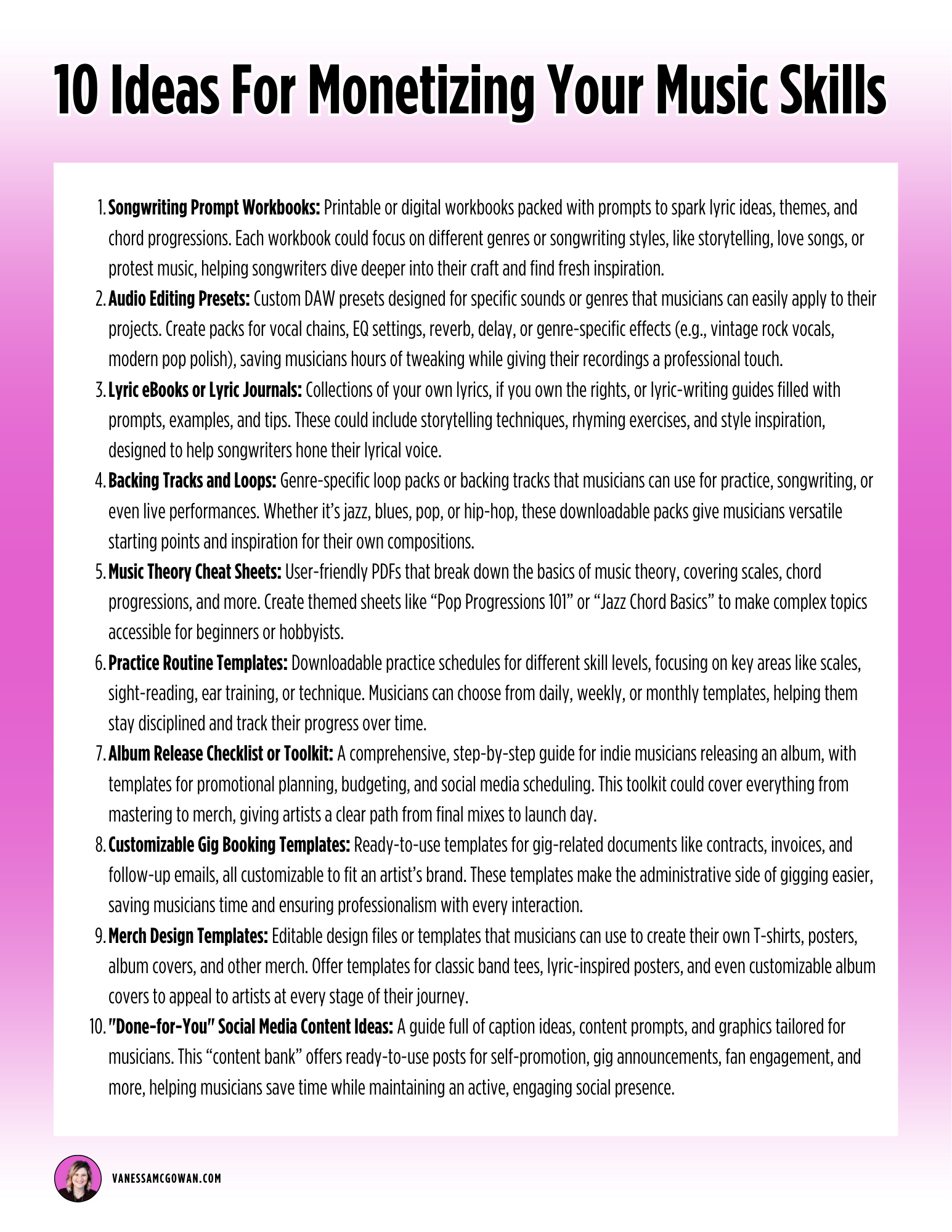
10 Ideas For Monetizing Your Music Skills
Songwriting Prompt Workbooks: Printable or digital workbooks packed with prompts to spark lyric ideas, themes, and chord progressions. Each workbook could focus on different genres or songwriting styles, like storytelling, love songs, or protest music, helping songwriters dive deeper into their craft and find fresh inspiration.
Audio Editing Presets: Custom DAW presets designed for specific sounds or genres that musicians can easily apply to their projects. Create packs for vocal chains, EQ settings, reverb, delay, or genre-specific effects (e.g., vintage rock vocals, modern pop polish), saving musicians hours of tweaking while giving their recordings a professional touch.
Lyric eBooks or Lyric Journals: Collections of your own lyrics, if you own the rights, or lyric-writing guides filled with prompts, examples, and tips. These could include storytelling techniques, rhyming exercises, and style inspiration, designed to help songwriters hone their lyrical voice.
Backing Tracks and Loops: Genre-specific loop packs or backing tracks that musicians can use for practice, songwriting, or even live performances. Whether it’s jazz, blues, pop, or hip-hop, these downloadable packs give musicians versatile starting points and inspiration for their own compositions.
Music Theory Cheat Sheets: User-friendly PDFs that break down the basics of music theory, covering scales, chord progressions, and more. Create themed sheets like “Pop Progressions 101” or “Jazz Chord Basics” to make complex topics accessible for beginners or hobbyists.
Practice Routine Templates: Downloadable practice schedules for different skill levels, focusing on key areas like scales, sight-reading, ear training, or technique. Musicians can choose from daily, weekly, or monthly templates, helping them stay disciplined and track their progress over time.
Album Release Checklist or Toolkit: A comprehensive, step-by-step guide for indie musicians releasing an album, with templates for promotional planning, budgeting, and social media scheduling. This toolkit could cover everything from mastering to merch, giving artists a clear path from final mixes to launch day.
Customizable Gig Booking Templates: Ready-to-use templates for gig-related documents like contracts, invoices, and follow-up emails, all customizable to fit an artist’s brand. These templates make the administrative side of gigging easier, saving musicians time and ensuring professionalism with every interaction.
Merch Design Templates: Editable design files or templates that musicians can use to create their own T-shirts, posters, album covers, and other merch. Offer templates for classic band tees, lyric-inspired posters, and even customizable album covers to appeal to artists at every stage of their journey.
"Done-for-You" Social Media Content Ideas: A guide full of caption ideas, content prompts, and graphics tailored for musicians. This “content bank” offers ready-to-use posts for self-promotion, gig announcements, fan engagement, and more, helping musicians save time while maintaining an active, engaging social presence.
Financial Stability Protects Your Creativity
Thriving financially as a musician isn’t about one lucky break; it’s about building stability around your art.
The industry will always be unpredictable, but your finances don’t have to be.
Multiple income streams don’t dilute your identity as a musician — they strengthen it.
They give you breathing room.
And breathing room is where good music gets made.